
Operating through a Canadian-Controlled Private Corporation (CCPC) or Professional Corporation is one of the most effective wealth-building structures available in Canada. However, the tax advantage you enjoy when money enters your corporation can quickly evaporate if you do not architect how that capital is invested inside the company and how it eventually exits to you and your family.
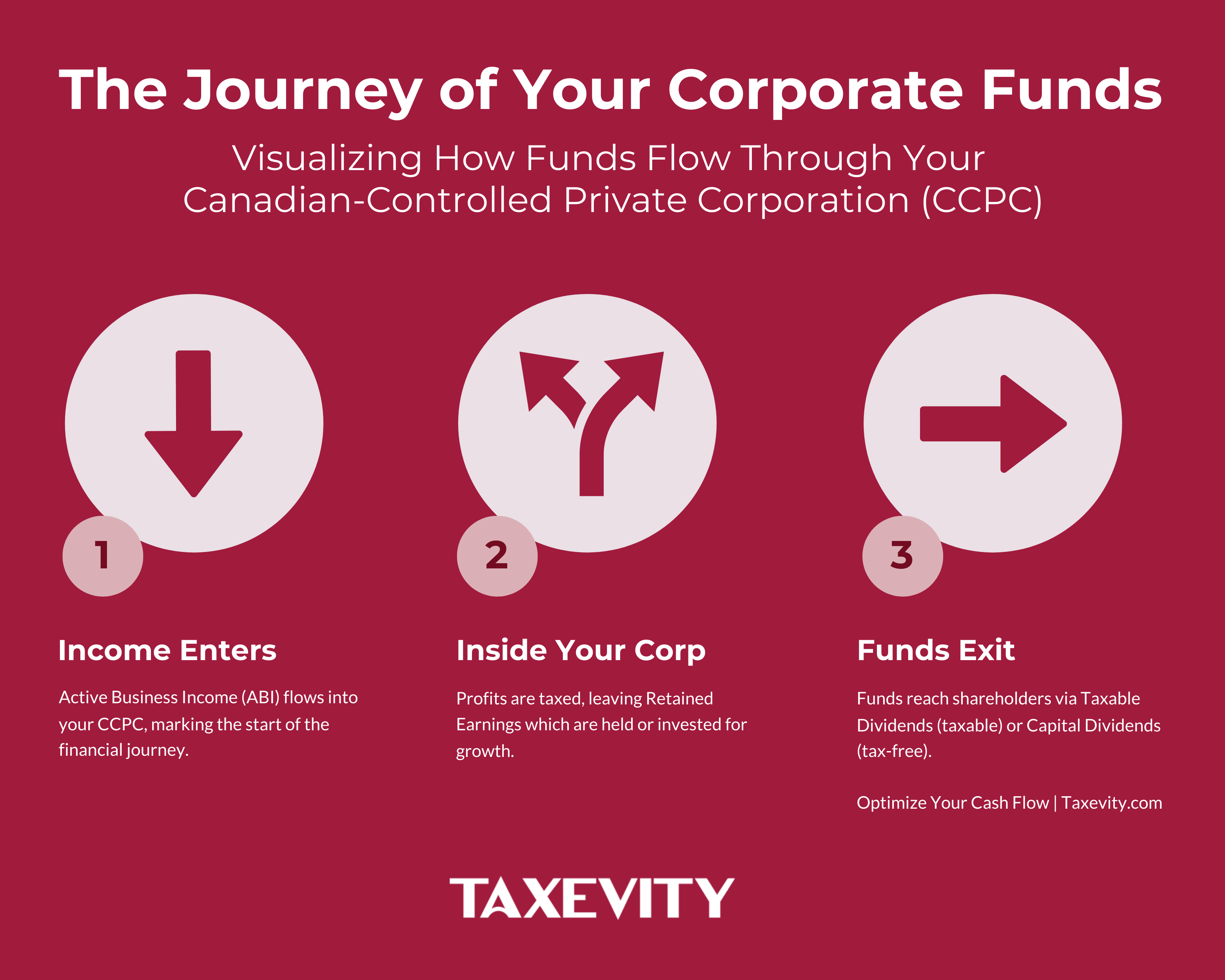
Stage 1: Income Enters the Corporation (Active Business Income)
When your corporation earns Active Business Income (ABI), the first $500,000 of qualifying profit benefits from the Small Business Deduction (SBD). In Ontario, this reduces the combined federal and provincial corporate tax rate to just 12.2% (and 26.5% on active income above $500,000).
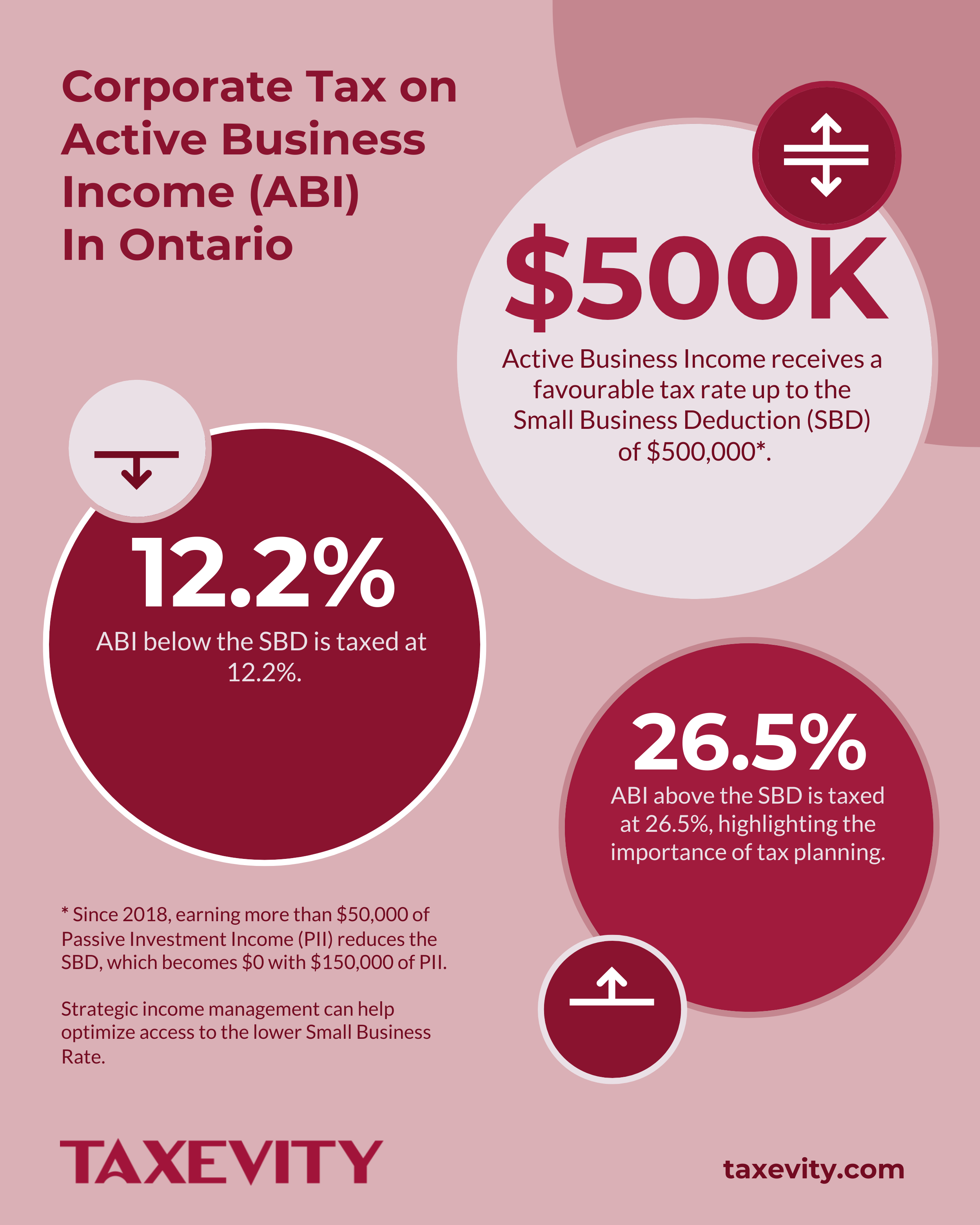
Because the top personal marginal tax rate in Ontario is 53.53%, leaving surplus profit inside your corporation creates an immediate 41.33% tax deferral—giving you far more starting capital to invest.
Stage 2: Inside the Corporation (The Passive Income Tax Trap)
Once you invest those retained earnings in stocks, bonds, GICs, or rental real estate inside your corporation (or holding company), the tax rules change dramatically:
- 50.17% Upfront Passive Tax: Aggregate Investment Income (interest, foreign dividends, and taxable capital gains) is taxed at 50.17% in Ontario.
- The SBD “Passive Income Grind”: For every $1 of Adjusted Aggregate Investment Income (AAII) your corporation earns above $50,000 in a year, your $500,000 Small Business Deduction limit is reduced by $5—wiping out the SBD completely once passive income reaches $150,000.
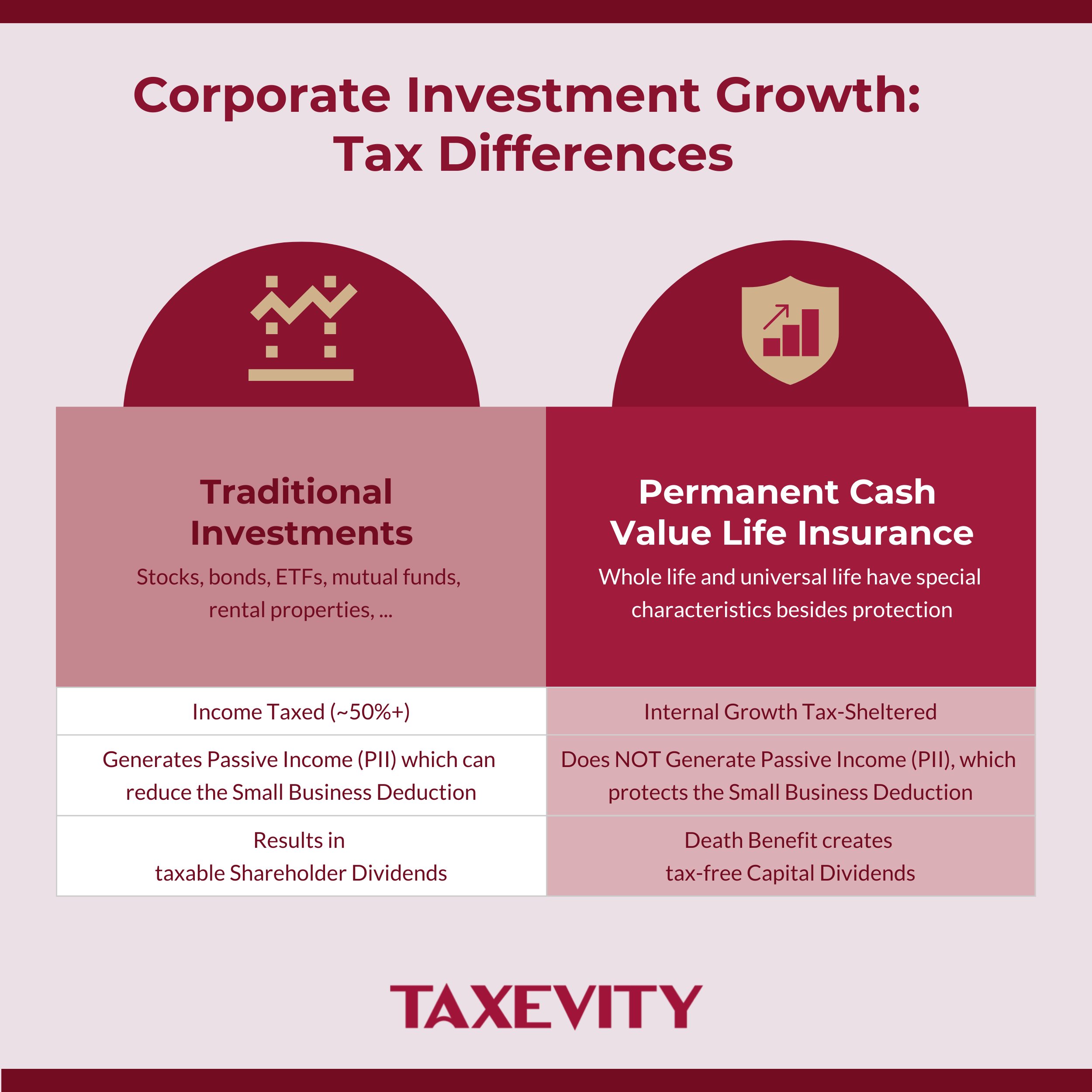
By reallocating a portion of your corporate surplus into a tax-exempt Corporate-Owned Life Insurance (COLI) policy, the cash value grows tax-sheltered without generating annual AAII—helping protect your Small Business Deduction.
Stage 3: Getting Corporate Funds Out to Shareholders
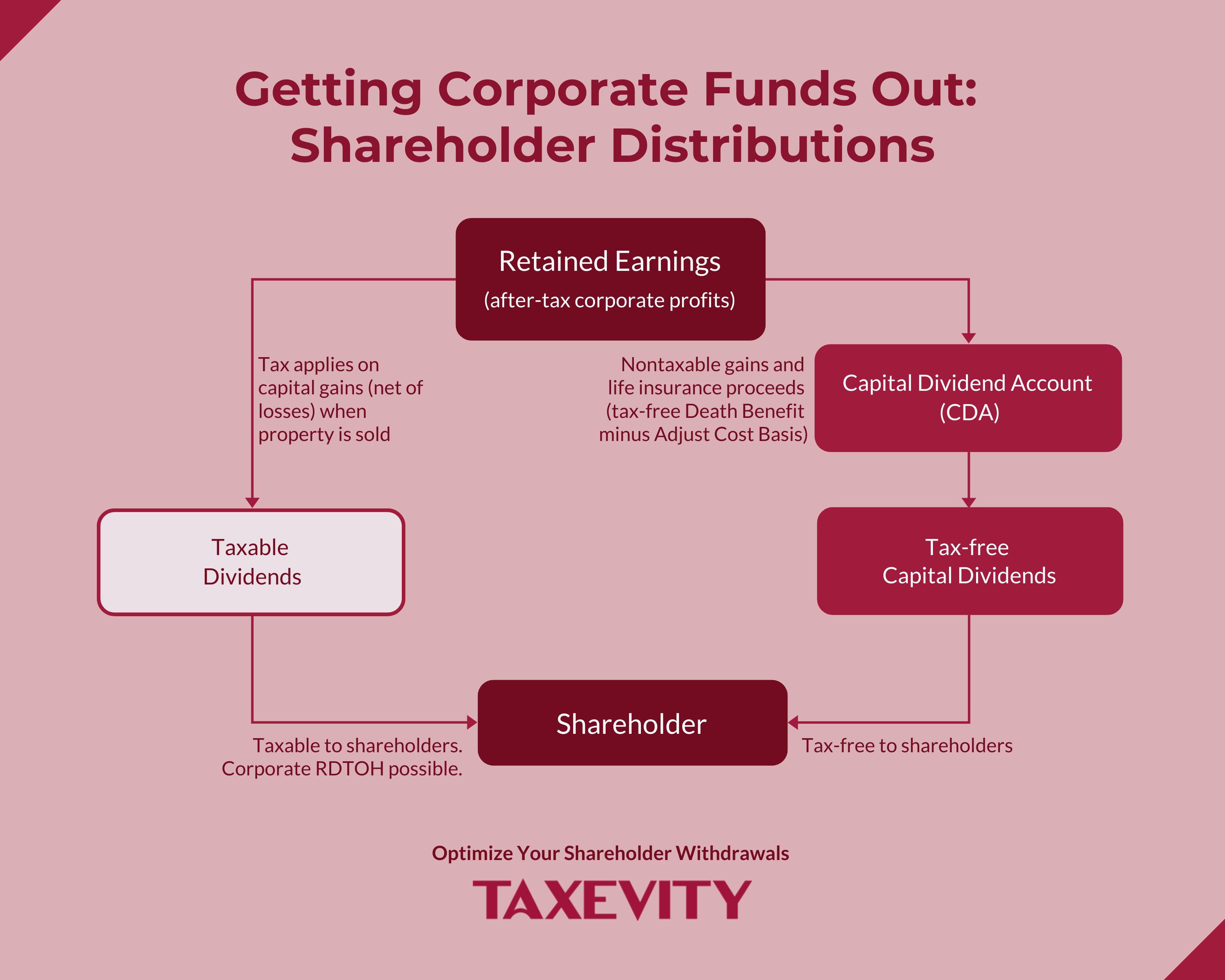
When funds exit your corporation, the tax treatment depends entirely on the channel used:
- Taxable Dividends (Eligible & Non-Eligible): Taxed personally at up to 39.34% (eligible) or 47.74% (non-eligible) in Ontario.
- Capital Dividends via the CDA: The non-taxable portion of capital gains and the net death benefit of a corporate life insurance policy credit your Capital Dividend Account (CDA), which can be distributed to shareholders 100% tax-free.